
Melanoma

What Is Melanoma?
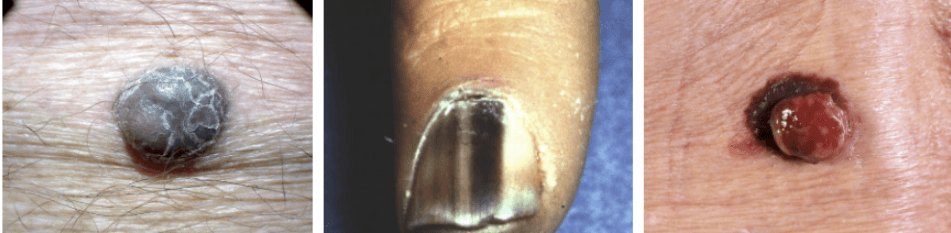
Melanoma occurs when melanocytes undergo DNA damage, often from UV exposure, and begin to grow uncontrollably. It can develop within an existing mole or appear as a brand-new spot on skin that looked normal before, and it can occur anywhere on the body, including areas with little or no sun exposure.
What sets melanoma apart from other skin cancers is how it behaves once it grows deeper into the skin. Depth of invasion, known as Breslow depth, is one of the strongest predictors of outcome, which is exactly why early detection changes the trajectory of this disease more than almost any other cancer.
How to Detect Melanoma
- Asymmetry: one half of the spot doesn't match the other
- Border: edges are irregular, notched, blurred, or poorly defined
- Color: multiple shades of brown, black, tan, red, white, or blue within one spot
- Diameter: larger than 6 millimeters, roughly the size of a pencil eraser, though melanoma can be smaller
- Evolving: any change in size, shape, color, elevation, or new symptoms like itching or bleeding, often considered the most important warning sign
- Also watch for the "ugly duckling" sign: a mole that looks noticeably different from your other moles, even if it doesn't check every ABCDE box
When Should You See a Doctor?
- Any mole or spot that matches one or more of the ABCDE criteria
- A new mole appearing after age 30
- A mole that's changed in size, shape, or color over recent weeks or months
- A spot that itches, bleeds, or won't heal
- A personal or family history of melanoma, which warrants annual (or more frequent) professional skin exams
What Happens If Melanoma Is Left Untreated?
Melanoma is unique among skin cancers in how quickly it can progress from a highly curable, localized spot to a life-threatening disease. Untreated melanoma grows deeper into the skin and can spread through the lymphatic system to nearby lymph nodes, and from there to distant organs like the lungs, liver, and brain.
Survival outcomes are directly tied to how early melanoma is caught. Thin, early-stage melanomas removed before they spread have excellent long-term outcomes. Once melanoma reaches the lymph nodes or spreads further, treatment becomes far more involved, often requiring surgery, immunotherapy, or targeted therapy in coordination with an oncologist. This is the clearest example in dermatology of why a spot that seems minor is worth having checked right away rather than waiting to see if it changes.
The Genesis Dermatology Process
- A full dermoscopic evaluation of the spot in question, along with a broader skin check since melanoma risk often runs alongside multiple atypical moles
- A biopsy, typically excisional when melanoma is suspected, to get a complete picture of the lesion for the pathologist
- A detailed review of your pathology report, including Breslow depth and other staging factors, once results are in
- A treatment plan based on stage, which may range from a straightforward surgical excision for early, thin melanomas to sentinel lymph node biopsy and coordinated care with oncology for more advanced cases
- An ongoing surveillance schedule, since a melanoma diagnosis increases the importance of regular, thorough skin exams going forward