
Hair Loss

What Causes Hair Loss?
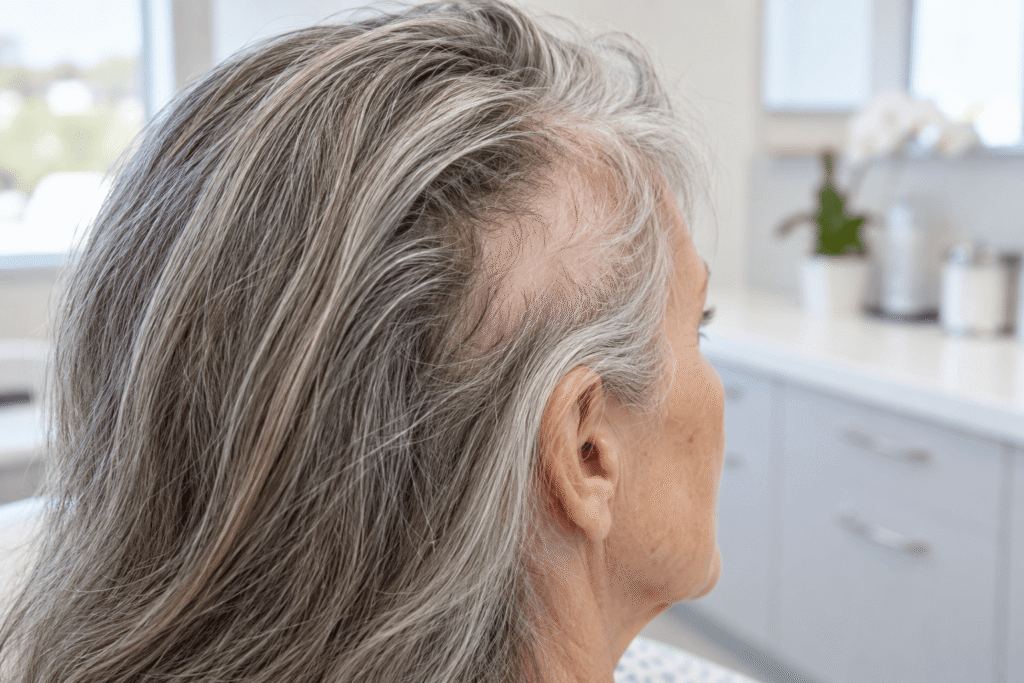
Hair loss, medically known as alopecia, isn’t a single condition, it’s a symptom with several distinct causes. Androgenetic alopecia (male and female pattern hair loss) accounts for roughly 95% of cases and is driven by genetics and the hormone DHT; in men it typically causes a receding hairline and crown thinning, while in women it usually shows up as more diffuse thinning without a receding hairline.
Alopecia areata is an autoimmune condition that causes sudden, patchy hair loss as the immune system mistakenly attacks hair follicles. Telogen effluvium is a temporary, diffuse shedding triggered by a stressor like illness, surgery, childbirth, a crash diet, a new medication, or a nutrient deficiency such as low iron, and it typically resolves once the underlying trigger is addressed. Less common causes include scarring alopecia, which permanently damages follicles, and traction alopecia from tight hairstyles or repeated tension on the hair.
How to Detect Hair Loss Worth Evaluating
- Gradual thinning at the crown or a receding hairline (typical of pattern hair loss)
- Sudden, noticeable shedding well beyond your normal amount, often triggered by a recent illness, stress, or medication change
- Round or oval bald patches that appear suddenly (a hallmark of alopecia areata)
- Scalp tenderness, itching, redness, or scaling accompanying hair loss
- Thinning that's affecting your part width, ponytail thickness, or overall hair density
When Should You See a Doctor?
- You've used over-the-counter hair loss products for six months or more without improvement
- Shedding is sudden, severe, or accompanied by bald patches
- Your scalp is tender, itchy, or shows visible redness or scaling
- Hair loss is affecting your confidence or emotional well-being
- You want an accurate diagnosis before starting treatment, since the right approach depends entirely on the underlying cause
What Happens If Hair Loss Is Left Untreated?
The physical consequences of delaying treatment vary by type. Pattern hair loss is progressive, meaning it tends to continue and worsen over time without intervention, and the follicles involved can eventually stop producing hair altogether, at which point regrowth becomes far more difficult. Scarring alopecia is even more time-sensitive: the inflammation involved permanently damages hair follicles, so early treatment is the only way to preserve the hair that’s still there.
Beyond the physical trajectory, the psychological impact of unaddressed hair loss is well documented and shouldn’t be underestimated. Research shows the quality-of-life burden from hair loss can be comparable to, or exceed, that of other visible chronic skin conditions, and it’s commonly linked to embarrassment, reduced self-esteem, social withdrawal, and in some cases anxiety or depression. Getting an early diagnosis isn’t just about preserving hair, it’s often about protecting how you feel day to day.
The Genesis Dermatology Process
- A consultation reviewing your hair loss pattern, timeline, family history, medications, and any recent illness or life changes
- A scalp exam, and bloodwork when a nutrient deficiency, thyroid issue, or other underlying condition is suspected
- A personalized treatment plan, which may include topical or oral minoxidil, finasteride for men, or other targeted medications depending on the diagnosis
- Platelet-rich plasma (PRP) therapy, which uses your own blood's growth factors to stimulate follicle activity, often combined with medication for better results
- For alopecia areata, treatment options like corticosteroid injections or other immune-modulating therapies
- Ongoing follow-up to track regrowth and adjust your plan, since most hair loss treatments take several months to show visible results