
Skin Tags
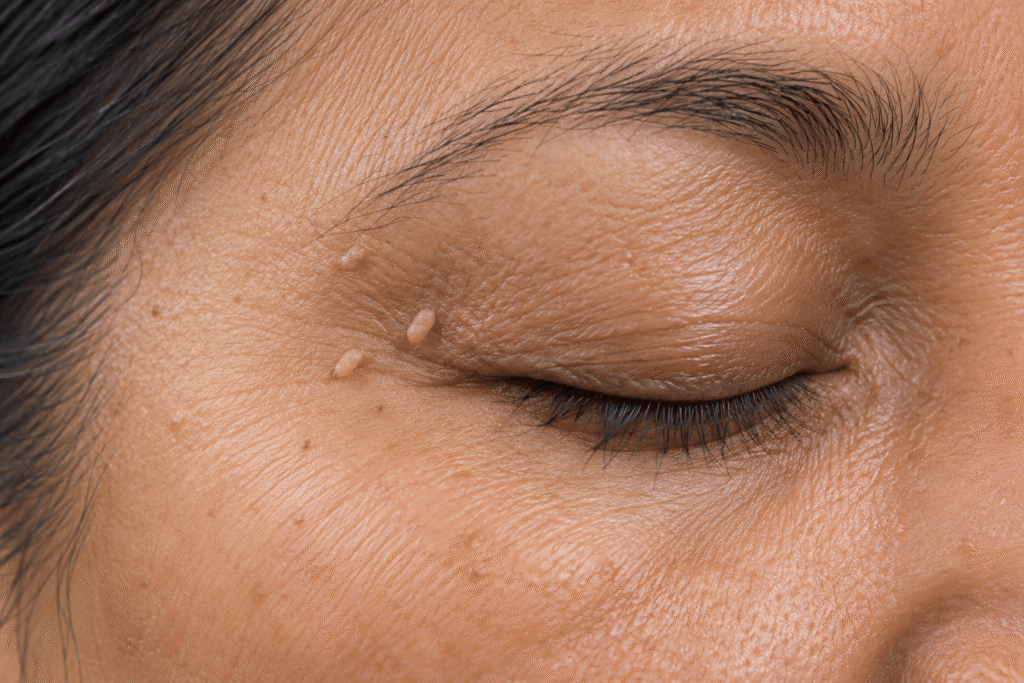
What Are Skin Tags?
Skin tags, medically called acrochordons, form when the body produces extra cells in the outer layers of skin, creating a small, soft, often stalk-like growth. They tend to develop in areas of friction, where skin repeatedly rubs against skin or clothing, and become more common with age. A family history of skin tags also raises your likelihood of developing them.
Skin tags themselves are completely benign and don’t turn into skin cancer. The main reason to have one evaluated isn’t the tag itself, it’s making sure that what looks like a skin tag is actually a skin tag, since other growths, including certain skin cancers, can occasionally be mistaken for one at a glance.
How to Detect a Skin Tag
- Soft, small, and often attached to the skin by a thin stalk (peduncle)
- Skin-colored or slightly darker, matching the texture of the surrounding skin
- Most commonly found on the neck, underarms, eyelids, groin folds, or under the breasts
- Painless unless irritated, twisted, or caught on clothing or jewelry
- Any growth that's firm, fixed to the skin without a stalk, changing in color, or bleeding without an obvious cause is not a typical skin tag and should be evaluated
When Should You See a Doctor?
- You're not certain whether it's actually a skin tag versus another type of growth
- It frequently catches on clothing, jewelry, or a razor, causing irritation or bleeding
- It's in a cosmetically visible area and you'd like it removed
- A skin tag suddenly changes in size, color, or shape, which is not typical behavior for a true skin tag
What Happens If a Bothersome Skin Tag Goes Untreated?
Skin tags themselves don’t pose a medical risk if left alone, they’re not dangerous and won’t develop into something more serious. The concern with leaving a bothersome one untreated is more about ongoing discomfort: skin tags in areas of friction, like the neck, underarms, or groin, tend to get repeatedly caught or irritated, which can lead to bleeding, soreness, or a tag becoming twisted at its stalk.
The bigger risk is actually misdiagnosis rather than the skin tag itself, attempting to remove a growth at home without confirming what it actually is can mean missing an early skin cancer that only resembled a skin tag, or dealing with excess bleeding, scarring, or infection from an improper at-home removal.

The Genesis Dermatology Process
- A visual exam to confirm the growth is a true skin tag and not something else that warrants further evaluation
- A discussion of removal options based on size and location: cryotherapy (freezing), electrocautery, or simple surgical snipping
- In-office removal, typically completed in minutes with minimal to no downtime
- Extra care and precision for skin tags in more delicate areas, like the eyelids, where minimizing scarring matters most
- Straightforward aftercare guidance, since most sites heal quickly without significant scarring