
Brown/Age Spots
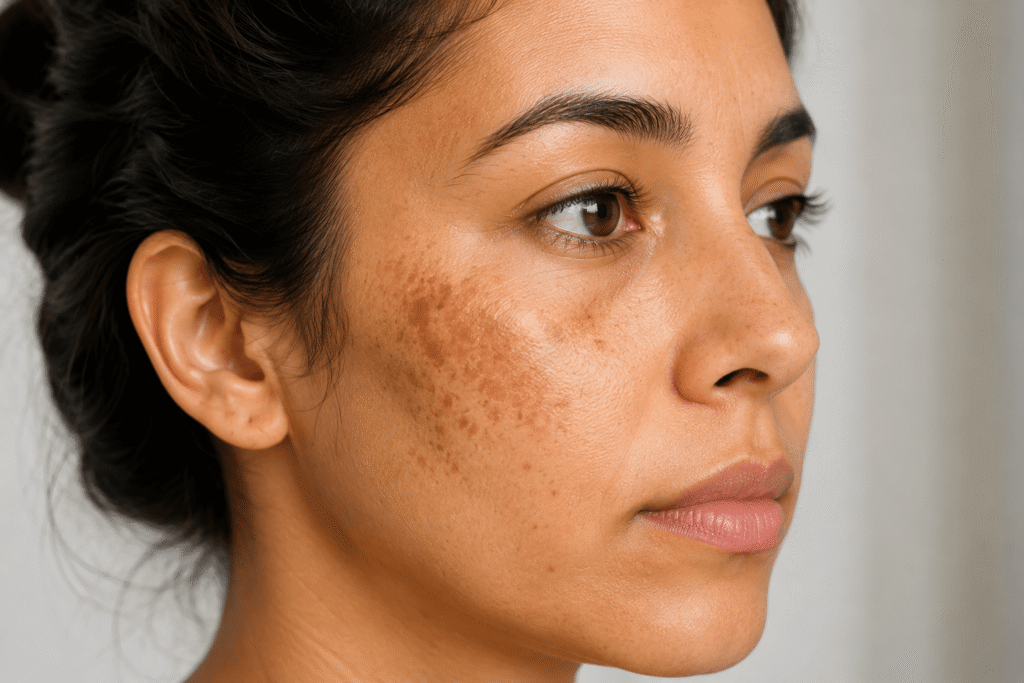
What Are Brown & Age Spots?
Brown spots form when years of UV exposure cause melanin, the pigment that gives skin its color, to clump together in concentrated areas rather than spreading evenly. This produces flat, well-defined patches, typically light tan to dark brown, most often on the areas that see the most cumulative sun over a lifetime: the face, shoulders, chest, forearms, and backs of the hands.
Anyone can develop brown spots, but they’re most common in fair-skinned adults over 40, since it typically takes years of sun exposure for them to become visible. Jupiter’s year-round sunny climate makes this an especially common concern for our patients.
How to Detect Brown & Age Spots
- Flat spots (no raised texture or thickness) ranging from light tan to dark brown or black
- Well-defined, symmetrical, round or oval borders
- Usually 2 to 20 millimeters in size
- Located on chronically sun-exposed skin: the face, shoulders, chest, forearms, and hands
- Stable in appearance over time, not growing, changing color, or developing irregular borders
When Is It Worth Treating Brown Spots?
- Brown spots are bothering you cosmetically or making your skin tone look uneven
- You want confirmation that a spot is a typical sun spot rather than something that needs closer monitoring
- You're noticing new spots appearing and want guidance on prevention alongside treatment
- Over-the-counter products haven't lightened existing spots to your satisfaction
What Happens If Brown Spots Are Left Untreated?
Brown spots themselves are benign and don’t turn into skin cancer, but they don’t fade or disappear on their own, and continued sun exposure without protection typically means both existing spots darkening and new ones forming over time. Because brown spots are a visible marker of significant cumulative UV exposure, having them evaluated is also a good opportunity to make sure nothing else in that sun-damaged skin needs closer attention.
From a purely cosmetic standpoint, waiting to treat existing spots means living with a less even skin tone for longer, and in some cases, spots that have been present for many years can become slightly more resistant to lightening treatments than newer, less established ones.

The Genesis Dermatology Process
- A skin exam to confirm your spots are typical sun spots and not a lesion that warrants a biopsy or different evaluation
- Laser or IPL (intense pulsed light) treatment to target and break down the concentrated pigment with minimal impact on surrounding skin
- Chemical peels to exfoliate pigmented surface cells and improve overall tone
- Topical lightening treatments for milder cases or as a complement to procedural treatment
- Sun protection guidance to help maintain your results and prevent new spots from forming