
Volume Loss
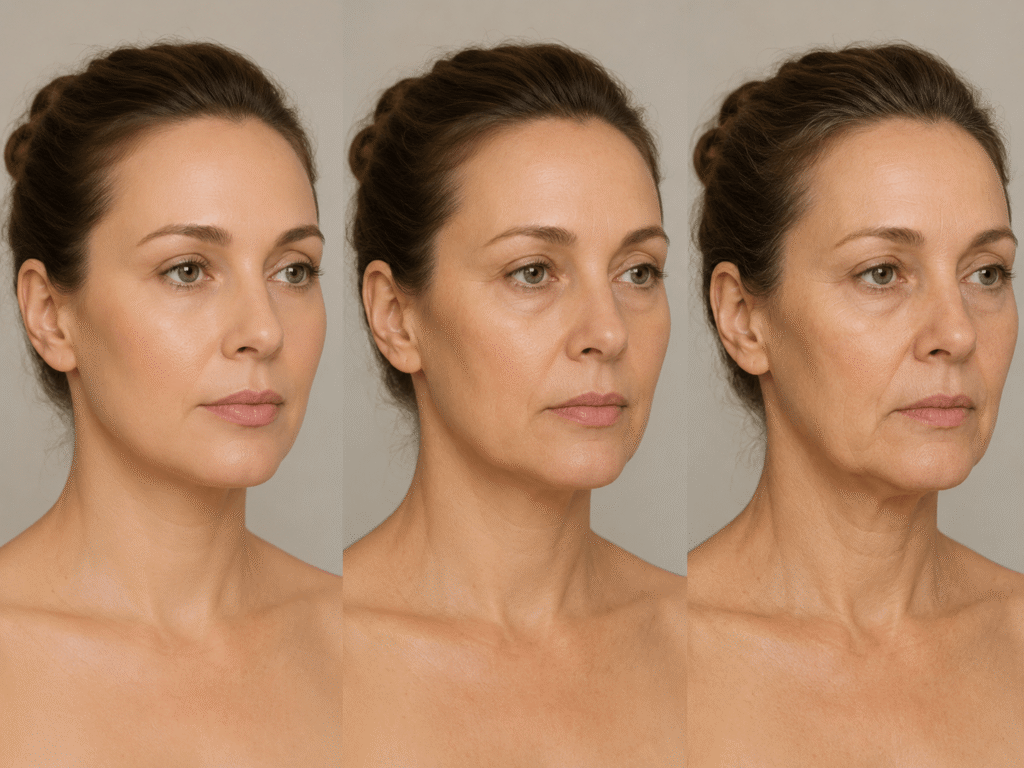
What Causes Volume Loss?
Facial volume loss happens beneath the skin’s surface, not on it. The fat pads that give youthful faces their fullness both shrink and shift downward with age, no longer providing the same support to the skin above them. At the same time, the facial skeleton itself gradually loses volume: research shows the eye sockets can widen by 15 to 20% and the upper jaw can lose 8 to 15% of its height by the seventh decade of life, removing the very scaffolding that soft tissue relies on.
This combination of shrinking fat pads and bone resorption, layered on top of skin thinning and decreased elasticity, is what produces the hollowing, flattening, and sagging most people associate with an aging face, changes that surface skincare and even neuromodulators like Botox cannot address, since they aren’t happening at the skin’s surface.
How to Detect Volume Loss
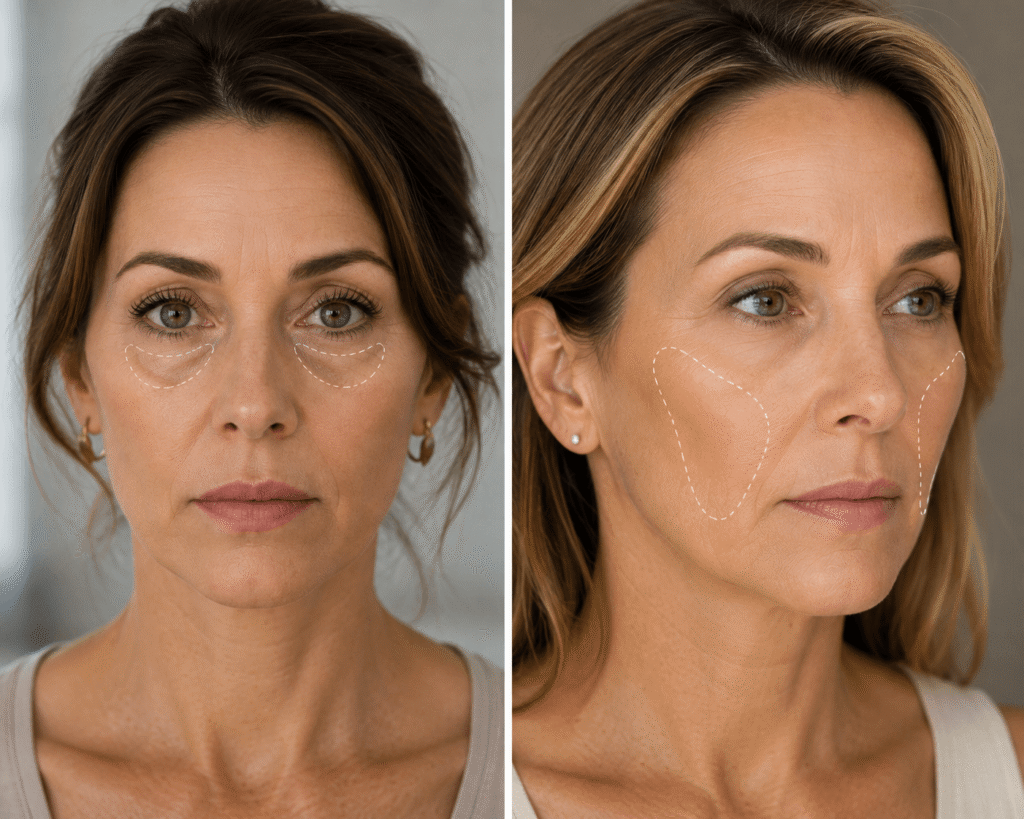
- Hollowing under the eyes or in the temples
- Flatter, less full-looking cheeks compared to earlier in life
- Deepening nasolabial folds (the lines running from the nose to the corners of the mouth) or marionette lines
- A less defined jawline, sometimes with the appearance of jowls as support diminishes
- A face that looks tired, hollow, or "deflated" even when you feel well-rested
When Is It Worth Treating Volume Loss?
- You notice hollowing in the cheeks, temples, or under the eyes
- Your face looks tired or hollow even when you're well-rested and otherwise feeling good
- Deepening folds or lines seem related to lost support rather than surface wrinkling alone
- You've tried Botox or skincare and feel like something else is still missing from your results
- You want a proactive approach to maintain natural contours before volume loss becomes more advanced
What Happens If Volume Loss Is Left Untreated?
Volume loss is progressive and compounds over time. As fat pads continue to shrink and shift, and bone resorption continues in the background, the structural support for your skin gradually diminishes further, which is part of why sagging and hollowing tend to become more pronounced, not less, the longer they go unaddressed.
Waiting to address significant volume loss generally means needing a larger, more involved correction to achieve a natural result than would have been required with earlier, more conservative treatment. Addressing volume loss proactively and gradually, rather than all at once after it’s become advanced, tends to produce a more subtle, natural-looking outcome overall.
The Genesis Dermatology Process
- A consultation and facial assessment to identify exactly where volume has been lost and how it's affecting your overall contours
- A personalized filler plan matched to your anatomy: options include Juvéderm and Restylane for moderate volume and folds, Voluma XC for structural cheek volume, RHA or Revanesse Versa for balanced, natural-looking correction, Radiesse for collagen-stimulating volume, and Sculptra for gradual volume rebuilding over a series of sessions
- Deeper, structural placement of filler near the bone for patients with more significant support loss, versus more superficial placement for finer contouring
- A conservative, proportion-first approach designed to restore natural fullness rather than create an overfilled look
- A staged treatment plan for more advanced volume loss, since gradual correction over time often produces a more natural result