
Warts
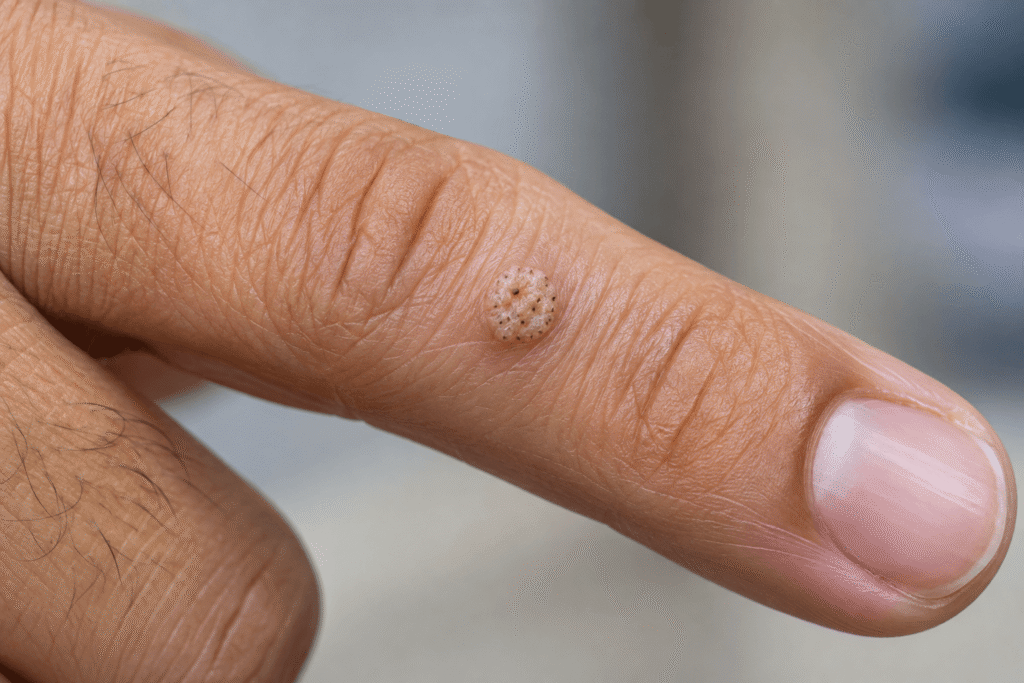
What Are Warts?
Warts form when HPV infects the outer layer of skin, causing cells to grow rapidly and create a rough, raised bump. There are over 100 types of HPV, and different strains tend to cause different types of warts: common warts (usually on the hands), plantar warts on the soles of the feet, flat warts (smaller and smoother, often on the face or legs), and genital warts, which are sexually transmitted.
Warts spread through direct or indirect contact, meaning they can pass from person to person or from one area of your own body to another, particularly through breaks in the skin or shared surfaces like locker room floors and public showers.
How to Detect a Wart
- Common warts: rough, raised, grainy bumps, often on the hands or fingers
- Plantar warts: flat growths on the sole of the foot, sometimes with tiny black dots (small clotted blood vessels), that can grow inward and become painful when walking
- Flat warts: smaller, smoother, slightly raised, often appearing in clusters on the face, arms, or legs
- Genital warts: small, flesh-colored or grayish, sometimes clustered in a cauliflower-like pattern; not always accompanied by pain or itching
- Warts that persist for months, multiply, or don't respond to over-the-counter treatment
When Should You See a Doctor?
- A wart hasn't gone away after several months, or is spreading despite home treatment
- A wart is painful, particularly a plantar wart affecting how you walk
- You're developing new warts in multiple areas
- A wart is located near the eyes, mouth, or genitals, areas that are more challenging to treat and carry a higher risk of complications if self-treated
- You have any suspected genital warts, which should always be professionally evaluated
What Happens If Warts Are Left Untreated?
Many warts do eventually resolve on their own, sometimes over a period of months to a couple of years, but leaving them untreated in the meantime carries real downsides. Warts are contagious, so an untreated wart can spread to other parts of your body or to other people through direct contact or shared surfaces. Plantar warts, in particular, can grow deeper and larger the longer they’re left alone, sometimes becoming painful enough to affect walking.
Genital warts deserve particular attention: while most are caused by lower-risk HPV strains, certain related HPV types are associated with a higher risk of malignancy, particularly in immunocompromised patients, which is one more reason any genital wart should be professionally evaluated rather than self-treated or ignored.

The Genesis Dermatology Process
- An exam to confirm the diagnosis and identify the type of wart you're dealing with
- In-office treatment options, including cryotherapy (freezing), topical prescription-strength treatments, or minor procedures for warts that haven't responded to other approaches
- A tailored plan for stubborn or recurring warts, since treatment failure and recurrence are more common in certain cases and may require a combination approach
- Extra caution and specialized care for warts near sensitive areas like the eyes or genitals
- Guidance on reducing spread to other parts of your body or to others while a wart is being treated