
Uneven Tone
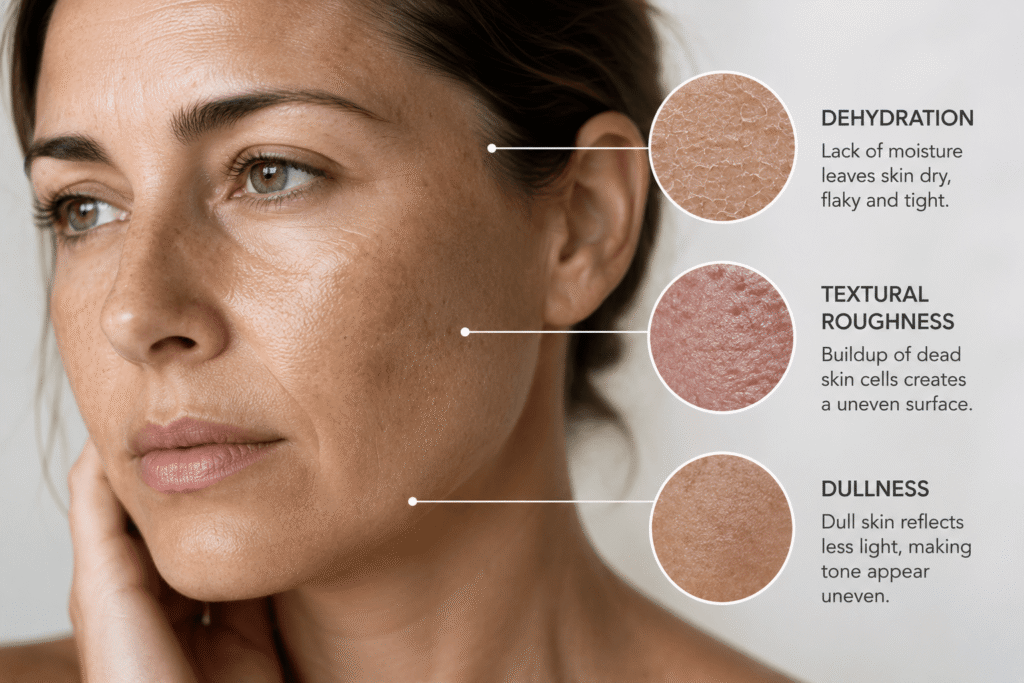
What Causes Uneven Skin Tone?
Uneven tone is usually a combination effect rather than a single diagnosis. Sun-induced pigmentation, redness from visible or broken blood vessels, lingering marks from old acne or skin injuries, and early, subtle melasma can all layer on top of each other, creating an overall impression of blotchiness or inconsistency even when no single spot stands out as the obvious problem.
Dehydration, textural roughness, and dullness from a buildup of dead skin cells can also make tone appear less even, since uneven light reflection off a rough surface reads visually as patchiness, separate from actual pigment differences.
How to Detect Uneven Skin Tone
- Patchy or blotchy coloring across the face without one clearly defined dark spot
- A mix of pink or red areas alongside brown or tan discoloration
- Skin that looks duller or less radiant in certain areas compared to others
- Tone that appears more even with makeup but noticeably inconsistent without it
- Overall coloring that's more noticeable in photos or bright, direct light
When Is It Worth Addressing Uneven Tone?
- You feel like your skin tone looks inconsistent or dull, even without one specific spot bothering you
- You've tried multiple products aimed at brightening or evening tone without meaningful results
- You want a professional assessment of what's actually contributing to your specific pattern of unevenness
- You're interested in a more comprehensive resurfacing approach rather than spot-treating individual areas
What Happens If Uneven Tone Is Left Untreated?
Because uneven tone is usually driven by several overlapping factors, sun exposure, redness, old marks, it tends to become more pronounced over time as each contributing factor continues to build, particularly without consistent sun protection. What starts as subtle blotchiness in your 20s or 30s often becomes more noticeable and more textured with continued sun exposure and natural collagen decline.
Skipping a proper evaluation also means treating the visible surface, dullness or blotchiness, without addressing what’s actually driving it, which is why single-product approaches often disappoint. A comprehensive plan that treats the actual underlying combination of causes tends to produce more meaningful, longer-lasting improvement than repeatedly trying new spot treatments.
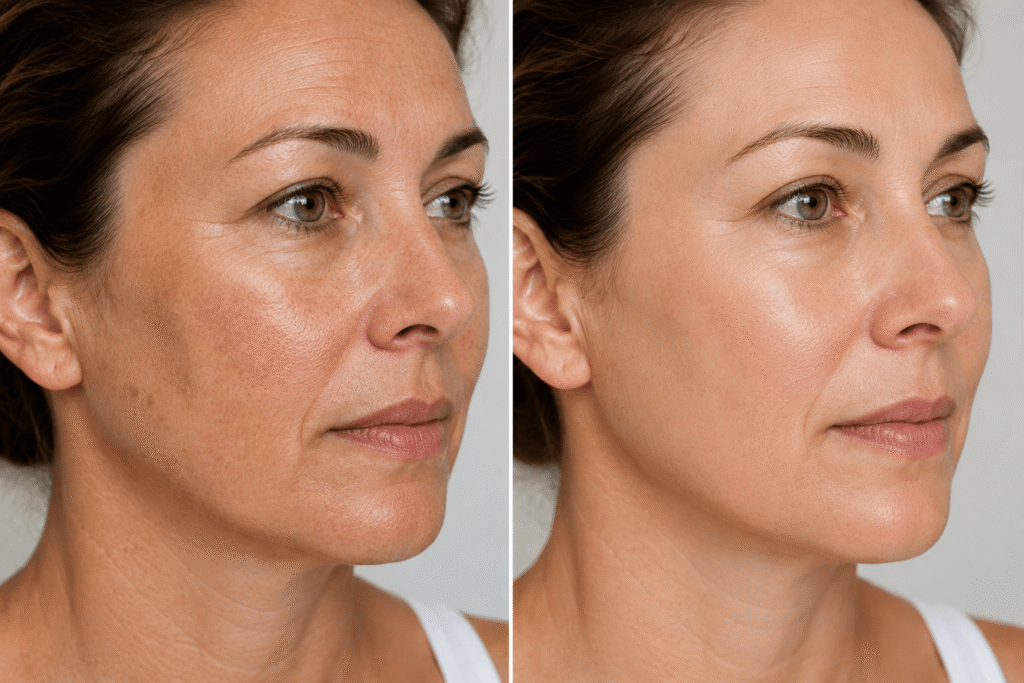
The Genesis Dermatology Process
- A thorough skin assessment to identify the specific combination of factors contributing to your tone: pigmentation, redness, texture, or a mix
- Broad-based resurfacing treatments, such as chemical peels, IPL, or laser treatment, which address tone and texture across the whole face rather than one spot at a time
- Microneedling or other collagen-stimulating treatments to improve overall texture alongside tone
- A personalized skincare regimen to support and maintain in-office results
- Ongoing sun protection guidance, since it's foundational to any lasting improvement in tone