
Shingles

What Is Shingles?
Shingles (herpes zoster) develop when the varicella-zoster virus, dormant in nerve tissue since a prior chickenpox infection, reactivates later in life. It’s more common with age and in people with weakened immune systems, though it can occur in anyone who’s had chickenpox.
Unlike many other skin infections, shingles have a very specific, time-sensitive treatment window. Because the virus is actively damaging nerve tissue during an outbreak, starting antiviral treatment as early as possible, ideally within 72 hours of the rash appearing, is one of the most important factors in how well the outbreak resolves and whether long-term complications develop.
How to Detect Shingles
- Burning, tingling, itching, or shooting pain in a specific area, often a few days before any visible rash
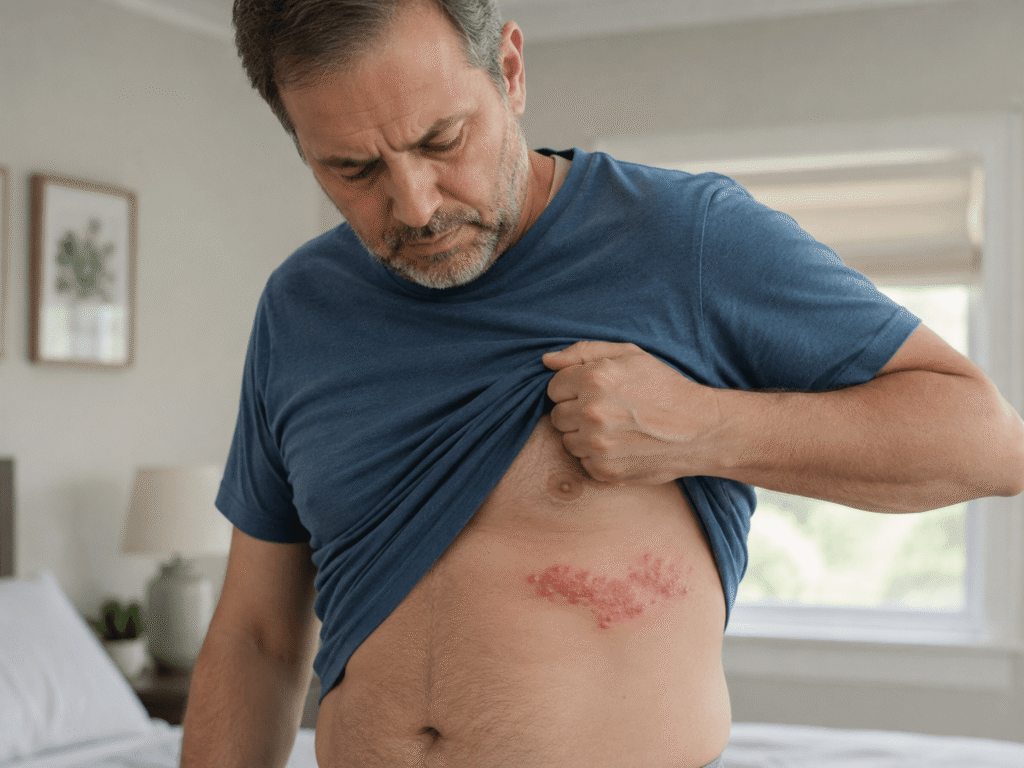
- A rash that develops in a band or strip on one side of the body, following a single nerve pathway (dermatome)
- Fluid-filled blisters that progress from clear to cloudy and eventually crust over, typically within 7 to 10 days
- Possible accompanying symptoms: fatigue, low-grade fever, and headache
- A rash near the eye or on the tip of the nose, which requires urgent evaluation given the risk to vision
When Should You See a Doctor?
- Any burning, tingling pain in a band-like pattern, even before a rash appears
- A blistering rash confined to one side of the body, especially if it follows a strip-like pattern
- A rash near the eye, forehead, or tip of the nose, this needs prompt evaluation to protect your vision
- Significant pain, fever, or a rash that's rapidly spreading
- Any shingles symptoms if you're over 50, immunocompromised, or have a chronic health condition, since prompt treatment matters most in these groups
What Happens If Shingles Is Left Untreated?
Delaying treatment beyond the ideal 72-hour window doesn’t mean treatment won’t help, but it does reduce how much benefit antiviral medication can provide, both for the current outbreak and for reducing your risk of the most common long-term complication: postherpetic neuralgia (PHN). PHN is persistent nerve pain that continues in the rash for three months or longer after the rash has healed, and it affects roughly 1 to 2 out of every 10 people who get shingles, with risk increasing with age.
Shingles involving the eye (herpes zoster ophthalmicus) carries its own serious risk if untreated, potentially leading to vision complications. Beyond these specific risks, an untreated shingles outbreak is also simply more painful and prolonged than one treated early, making prompt evaluation one of the more time-sensitive decisions in dermatology.
The Genesis Dermatology Process
- A prompt exam to confirm the diagnosis based on the rash's pattern and your symptoms
- Antiviral medication (such as acyclovir, valacyclovir, or famciclovir) started as soon as possible, ideally within 72 hours of rash onset
- Pain management options, including topical treatments and, when needed, oral medications for nerve pain
- Urgent referral to ophthalmology if the rash involves the eye or the tip of the nose
- A conversation about the shingles vaccine for future prevention once your current outbreak has resolved