
Cherry Angiomas
What Are Cherry Angiomas?
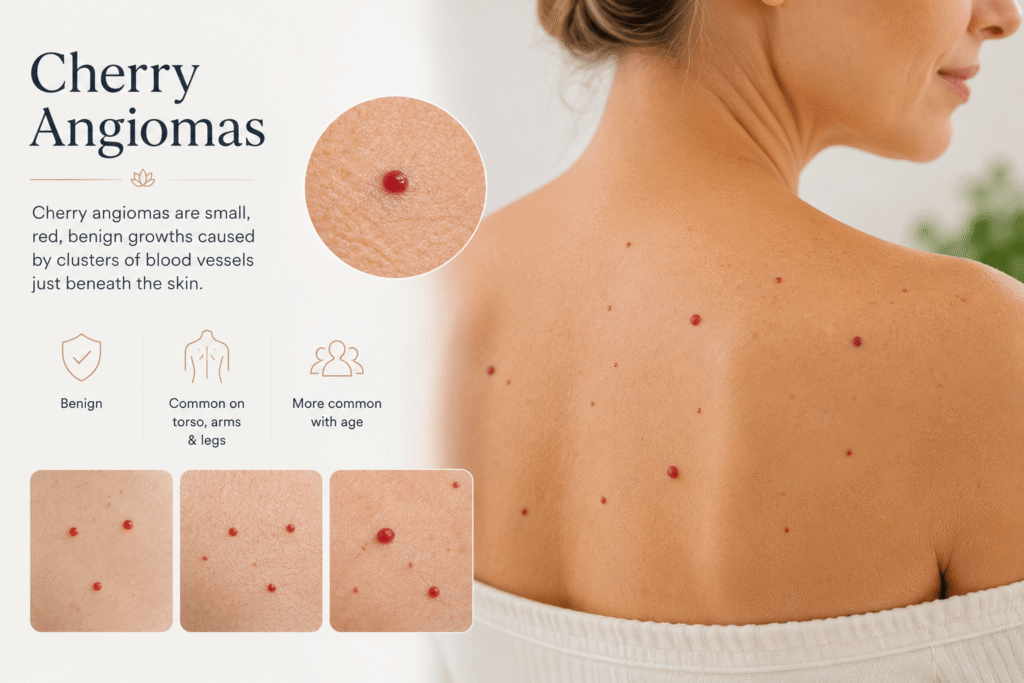
Cherry angiomas, sometimes called Campbell de Morgan spots, are small growths made up of a cluster of tiny blood vessels (capillaries) close to the skin’s surface. The exact cause isn’t fully understood, but they become dramatically more common with age, appearing in small numbers for many adults by their 30s or 40s and often becoming more numerous over subsequent decades.
They can develop anywhere on the body but are most common on the trunk, arms, and shoulders. Unlike broken capillaries, which are individual dilated vessels, cherry angiomas are a distinct cluster of vessels forming a raised or flat, dome-shaped growth.
How to Detect a Cherry Angioma
- Small, bright red to purplish dome-shaped bumps, often starting as a pinpoint dot
- Usually round and symmetrical, ranging from a couple millimeters to about a quarter inch
- Painless and non-itchy under normal circumstances
- Most common on the trunk, arms, and shoulders, though they can appear anywhere
- Prone to bleeding if caught on clothing, jewelry, or during shaving, since they're made up of blood vessels close to the surface
When Should You See a Doctor?
- You'd like a bothersome or frequently irritated cherry angioma removed
- A spot is bleeding, changing in size or color, or otherwise behaving differently than a typical cherry angioma
- You're not certain whether a red spot is a cherry angioma or something else that needs a different evaluation
- You're developing many new spots relatively quickly and want reassurance about what's causing it
What Happens If a Cherry Angioma Goes Unaddressed?
Typical cherry angiomas are entirely benign and don’t need to be treated for medical reasons, they don’t grow into anything more serious and pose no health risk left alone indefinitely. The main downside of leaving a bothersome one untreated is largely one of ongoing minor irritation: an angioma that sits somewhere prone to friction can continue getting nicked or caught, leading to repeated, if minor, bleeding.
The more important consideration is making sure any new or changing red or purple spot is actually a cherry angioma and not something else. A spot that’s bleeding, growing, or changing in appearance in ways atypical for a cherry angioma should always be evaluated to confirm the diagnosis before assuming it’s simply another benign angioma.
The Genesis Dermatology Process
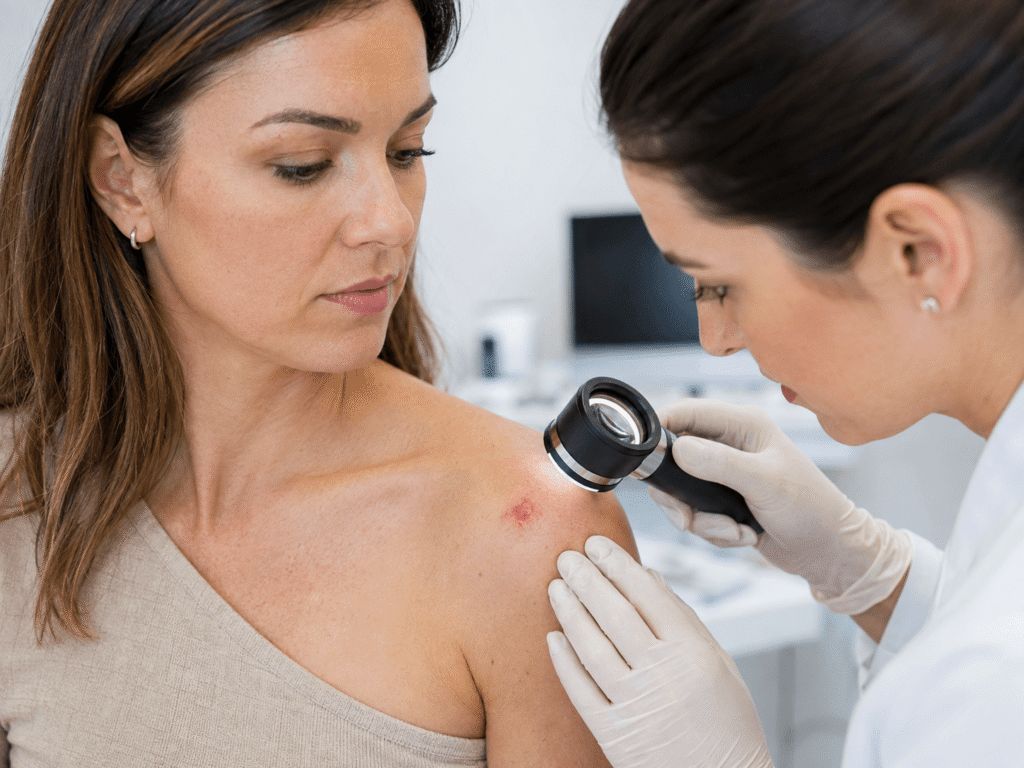
- A visual exam to confirm the diagnosis, which is usually straightforward given the classic appearance of cherry angiomas
- A discussion of removal options if you'd like the spot gone, whether for comfort or cosmetic reasons
- In-office removal via electrocautery or cryotherapy, both quick procedures typically completed in a single visit
- The ability to treat a cluster of angiomas in one session if you have several you'd like addressed
- Straightforward aftercare, since these are minor procedures with minimal downtime
Ready to Take the Next Step?
Frequently Asked Questions
Are cherry angiomas dangerous?
No, they’re completely benign and don’t pose a health risk. Removal is entirely elective and based on personal preference or comfort, not medical necessity, unless a spot’s appearance raises any concern that needs evaluation.
Why am I suddenly getting more of these as I get older?
Do cherry angiomas need to be removed?
Not unless they’re bothering you. Since they’re harmless, removal is a personal choice, often driven by cosmetic preference or because a spot keeps getting irritated.