
Hives
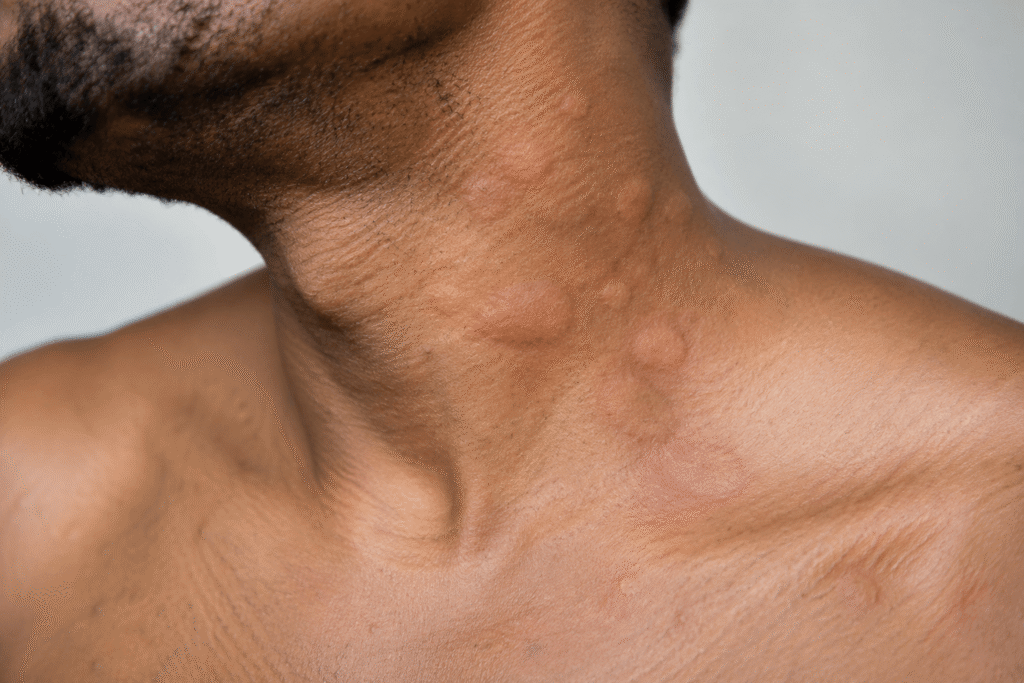
What Are Hives?
Hives develop when histamine and other chemicals are released in the skin, causing fluid to leak into the upper layers and produce raised, swollen welts. Acute hives, lasting less than six weeks, are usually tied to a clear trigger: a food, medication, insect sting, or infection.
Chronic hives, lasting six weeks or longer, are often idiopathic, meaning no specific trigger is ever identified, though they can also be linked to underlying immune conditions, thyroid disorders, chronic infections, or, rarely, other systemic issues.
How to Detect Hives
- Raised, red or skin-colored welts that can appear and disappear within hours
- Intense itching accompanying the welts
- Welts that vary in size and can merge into larger patches
- Individual welts that typically resolve within 24 hours, though new ones may appear elsewhere as others fade
- Possible accompanying angioedema, deeper swelling of the lips, eyelids, hands, or feet
When Should You See a Doctor?
- Hives last more than a few days without an obvious explanation
- Hives keep recurring over a period of six weeks or longer (chronic hives)
- You experience swelling of the lips, tongue, or throat, or have difficulty breathing, this is a medical emergency; call 911 or seek immediate care, as it can signal anaphylaxis
- Hives keep appearing with no identifiable trigger
- Symptoms are significant enough to disrupt your sleep or daily life
What Happens If Hives Are Left Untreated?
Chronic, unmanaged hives take a real toll on sleep, work, and overall quality of life the longer they go unaddressed, and without evaluation, an underlying trigger or condition driving the hives continues unidentified. Some patients live with recurring hives for months or years simply because they never sought an evaluation to look for an underlying cause.
In rarer cases, hives can be one visible sign of a broader allergic reaction that progresses to angioedema affecting the airway or full anaphylaxis, a life-threatening emergency that requires immediate treatment. If you’ve ever had hives accompanied by throat tightness, difficulty breathing, or swelling of the face, that history is important to discuss with a provider, since it may warrant carrying emergency epinephrine going forward.

The Genesis Dermatology Process
- A detailed history covering timing, duration, associated symptoms, and possible triggers
- A skin exam to confirm the diagnosis and rule out other rash types
- Bloodwork or allergy testing when chronic hives suggest a specific trigger or underlying condition worth investigating
- A personalized treatment plan, typically starting with antihistamines and stepping up to additional therapies for chronic or treatment-resistant hives
- A conversation about emergency preparedness, including an epinephrine prescription, if you have any history of a severe reaction
- Follow-up care to track your response and adjust treatment as needed