
Dermatitis

What Is Dermatitis?
“Dermatitis” simply means inflammation of the skin, and several different conditions fall under that umbrella. Irritant contact dermatitis develops when something directly damages the skin, harsh soap, repeated hand washing, or a chemical, for example. Allergic contact dermatitis is a delayed immune reaction to a specific allergen, such as nickel, fragrance, or poison ivy. Seborrheic dermatitis, meanwhile, is linked to yeast that naturally lives on the skin and tends to affect oil-rich areas like the scalp, face, and eyebrows.
It’s worth noting that dermatitis is distinct from eczema (atopic dermatitis), which stems from genetics and immune dysfunction rather than a specific external trigger, though the two can look similar and even coexist.
How to Detect Dermatitis
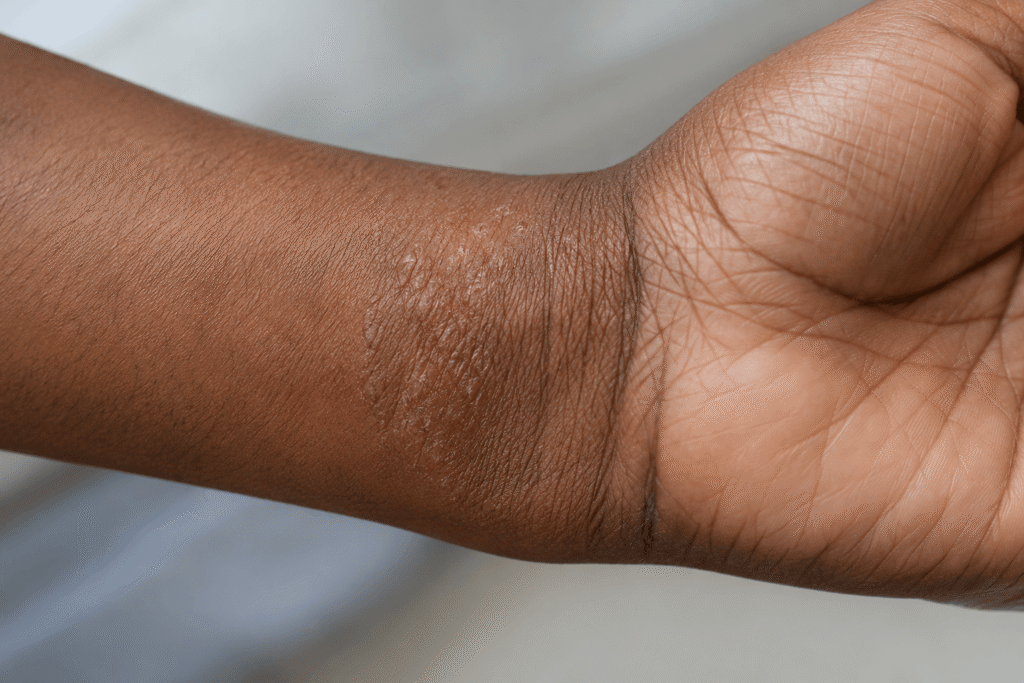
- Red, inflamed skin, sometimes with blistering, dryness, or scaling, appearing where an irritant or allergen made contact
- Itching, burning, or stinging at the affected site
- Irritant reactions often appearing within minutes to hours of exposure; allergic reactions typically appearing 1 to 3 days after contact
- Greasy, yellow-white scale on the scalp, face, eyebrows, or around the nose (seborrheic dermatitis)
- Thickened or cracked skin with repeated or prolonged exposure to a trigger
When Should You See a Doctor?
- A rash persists more than a couple of weeks after removing the suspected trigger
- The rash covers a large area of your body
- You notice signs of infection, such as yellow crusting, increased warmth, red streaking, or fever
- You can't identify what's causing your reaction on your own
- The same rash keeps recurring in the same location or pattern
What Happens If Dermatitis Is Left Untreated?
Continued exposure to an unidentified irritant or allergen can turn what should be a short-lived reaction into chronic, thickened, cracked skin that’s much harder to resolve. Repeated scratching also raises the risk of secondary bacterial infection, adding another layer to what started as a simple skin reaction.
For allergic contact dermatitis specifically, not identifying the trigger means the same reaction is likely to keep recurring indefinitely, since avoidance is the only reliable long-term solution. Seborrheic dermatitis left untreated tends to cause ongoing flaking and discomfort rather than resolving on its own, and in infants, it can persist longer than necessary without proper care.
The Genesis Dermatology Process
- A detailed history of your exposures, products, and the timeline of your rash
- A skin exam to distinguish between irritant, allergic, and seborrheic dermatitis
- Patch testing when allergic contact dermatitis is suspected and the specific trigger isn't obvious
- A personalized treatment plan, which may include topical steroids, antifungal or medicated shampoos for seborrheic dermatitis, and barrier-repair skin care
- Practical guidance on avoiding your identified trigger going forward
- A follow-up visit to review patch test results and refine your treatment plan if needed