
Facial Aging
What Causes Facial Aging?
Facial aging happens on two fronts at once. Intrinsic aging is the natural, genetically programmed process: starting in your mid-20s, collagen production declines by roughly 1% per year, and elastin, the protein that gives skin its bounce, gradually breaks down too. Beneath the skin, facial fat pads shrink and shift position, and even the underlying bone structure slowly loses volume, changes that reshape the face’s contours over decades.
Extrinsic aging comes from outside factors, and sun exposure is by far the biggest contributor, responsible for an estimated 80% of visible skin aging (a process called photoaging). Repeated facial expressions, smoking, and lifestyle factors like hydration and sleep also play a role. Together, these forces produce the changes most people associate with an aging face: fine lines and wrinkles, volume loss and hollowing, skin laxity, and changes in texture and tone.
How to Recognize the Signs of Facial Aging
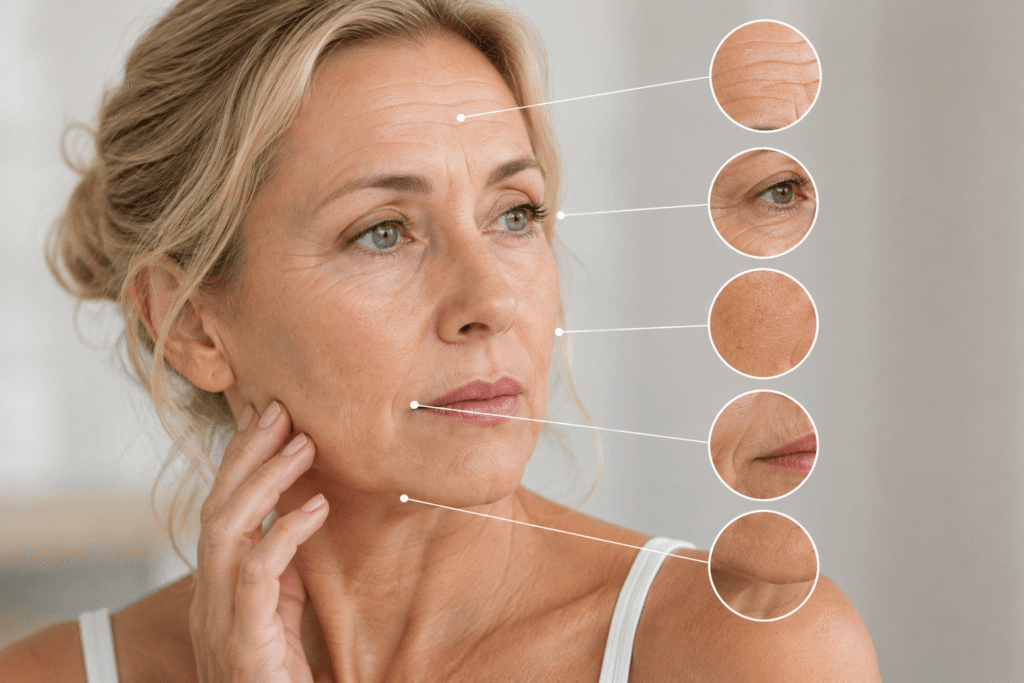
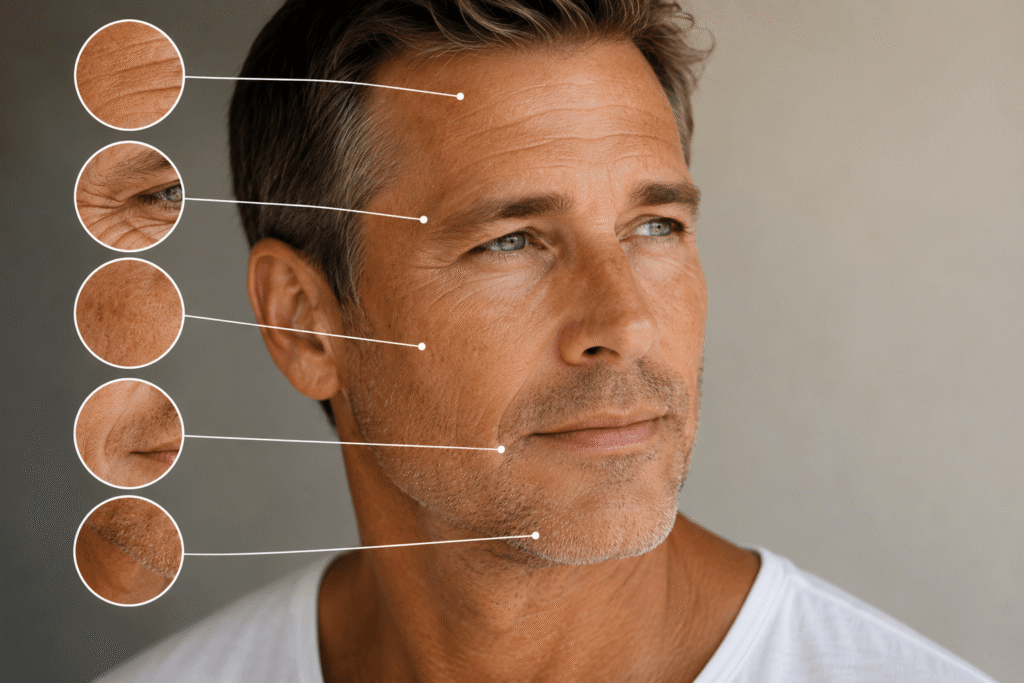
- Fine lines that first appear only with expression (dynamic lines) and gradually become visible at rest (static lines)
- Deeper wrinkles in expression-prone areas: the forehead, between the brows, and around the eyes
- Volume loss in the cheeks, temples, and under the eyes, creating a more hollowed or tired appearance
- Skin laxity, including a less defined jawline and looser skin along the neck
- Changes in texture, tone, and pigmentation, often related to cumulative sun exposure
When Is It Worth Addressing?
- You're noticing early fine lines and want to slow their progression before they become etched in at rest
- You feel like your face looks tired or hollow, even when you feel well-rested
- You're interested in a proactive, preventive approach rather than waiting until changes are more advanced
- You've tried skincare products without the results you're looking for
- You want an expert opinion on which specific changes, volume, lines, or laxity, are driving what you see in the mirror
What Happens If Facial Aging Goes Unaddressed?
Aging changes are progressive, meaning they compound over time rather than staying static. Dynamic lines that only show up when you make an expression gradually become etched into the skin permanently as collagen continues to break down, at which point they require more product or more intervention to soften than they would have earlier on. Unprotected sun exposure accelerates this timeline considerably, since photoaging compounds with intrinsic aging rather than happening separately from it.
The same is true of volume loss: earlier, more conservative correction tends to look more natural and require less product over time than trying to restore significant volume loss all at once further down the line. In short, addressing early signs of aging is generally easier, more subtle, and more cost-effective over the long run than waiting until changes are more advanced.
The Genesis Dermatology Process
- A consultation and skin assessment to identify which factors, muscle movement, volume loss, skin laxity, sun damage, are most relevant to your face
- A personalized plan that may combine several approaches: neuromodulators (Botox, Dysport, or Daxxify) for expression lines, dermal fillers for volume loss, and skin resurfacing treatments for texture and tone
- A conservative, proportion-first philosophy designed to look refreshed and natural rather than overdone
- Guidance on preventive skincare and sun protection to slow the pace of future changes
- A long-term relationship, since facial aging is an ongoing process best managed with periodic adjustments rather than a single visit