
Broken Capillaries
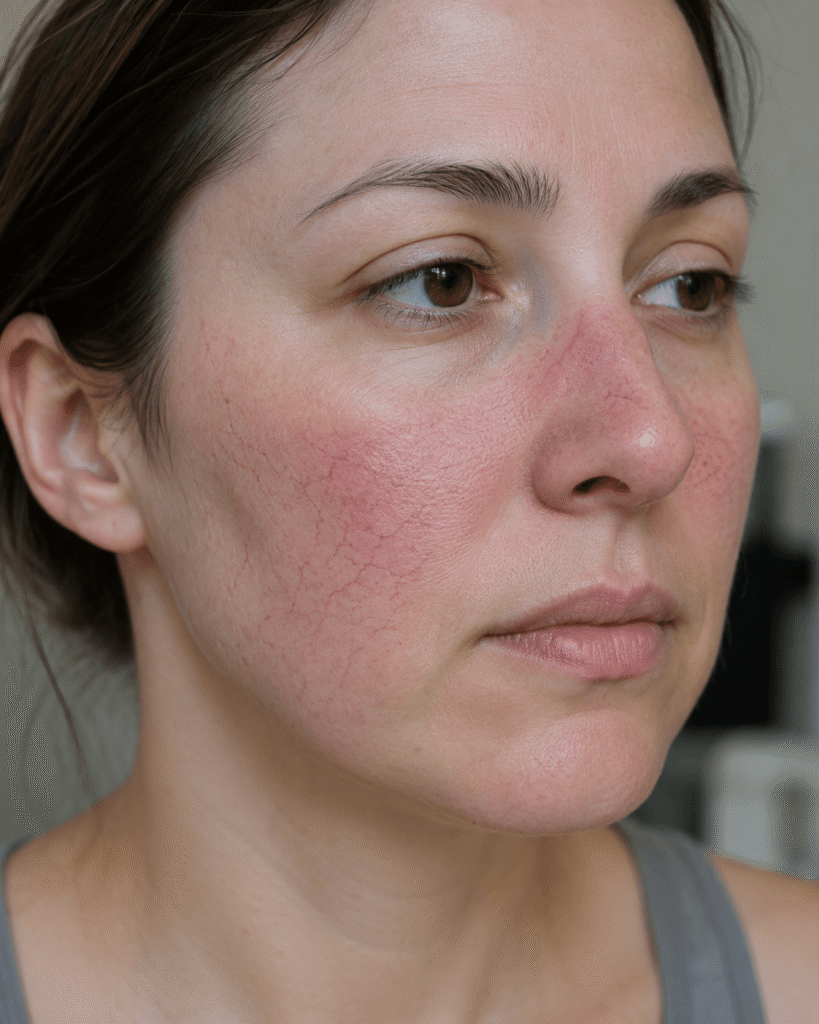
What Are Broken Capillaries?
Broken capillaries are tiny blood vessels near the skin’s surface that have become permanently dilated and visible. Despite the name, they’re not actually “broken” or leaking, the vessel walls have simply widened and lost some elasticity, making them show through the skin as fine red or purple lines.
Several factors contribute to their development: sun exposure weakens vessel walls over time, skin naturally becomes thinner and less elastic with age, genetics make some people more prone to visible vessels than others, and physical factors like extreme temperature changes, pressure, or aggressive skincare can also play a role.
How to Detect Broken Capillaries
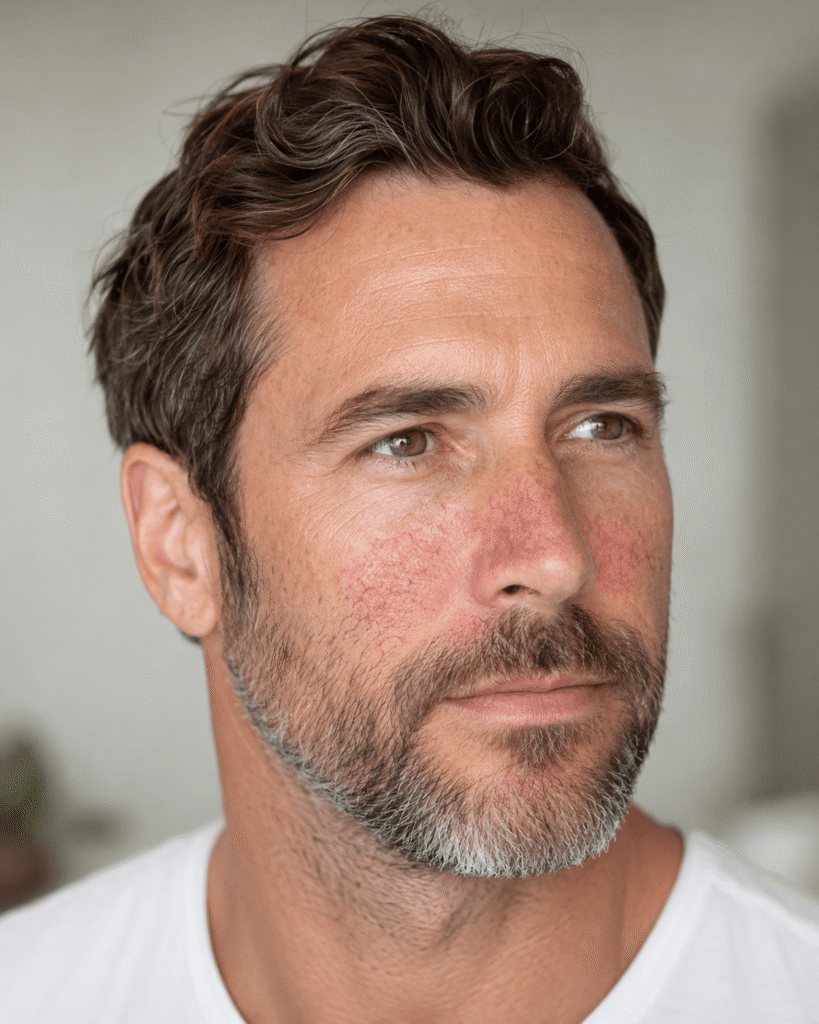
- Fine, thread-like red or purple lines visible near the skin's surface
- Most common on the nose, cheeks, and chin
- Can appear as isolated lines or a small cluster of vessels
- Don't cause any physical symptoms like pain or itching
- Visible consistently, unlike the temporary flushing that comes and goes with rosacea or general redness
When Is It Worth Treating Broken Capillaries?
- Visible vessels are bothering you cosmetically
- You've noticed new vessels appearing and want to understand what's contributing to them
- You want confirmation that what you're seeing is broken capillaries and not an early sign of something else, like rosacea
- You're interested in treatment now, since these vessels don't resolve without it
What Happens If Broken Capillaries Are Left Untreated?
Broken capillaries don’t fade or resolve on their own once they’ve become visible, they’re a permanent structural change in the vessel rather than a temporary discoloration. Left untreated, the number of visible vessels in a given area often increases gradually over time, particularly with continued sun exposure, since the same factors that caused the initial vessels to weaken keep affecting the surrounding skin.
While broken capillaries aren’t dangerous, waiting longer to treat them generally just means living with more visible vessels for a longer period, since treatment doesn’t become more difficult or less effective by waiting, it simply postpones an improvement that’s readily available.
The Genesis Dermatology Process
- A consultation and skin assessment to confirm the diagnosis and identify all the vessels worth targeting
- Laser treatment (such as a pulsed dye laser or Nd:YAG) that precisely targets and collapses the visible vessel while leaving surrounding skin unaffected
- IPL as an alternative option for more general redness alongside visible vessels
- A quick, well-tolerated in-office procedure, often completed in one session for isolated vessels
- Sun protection guidance to help prevent new vessels from forming after treatment