
Rosacea Redness
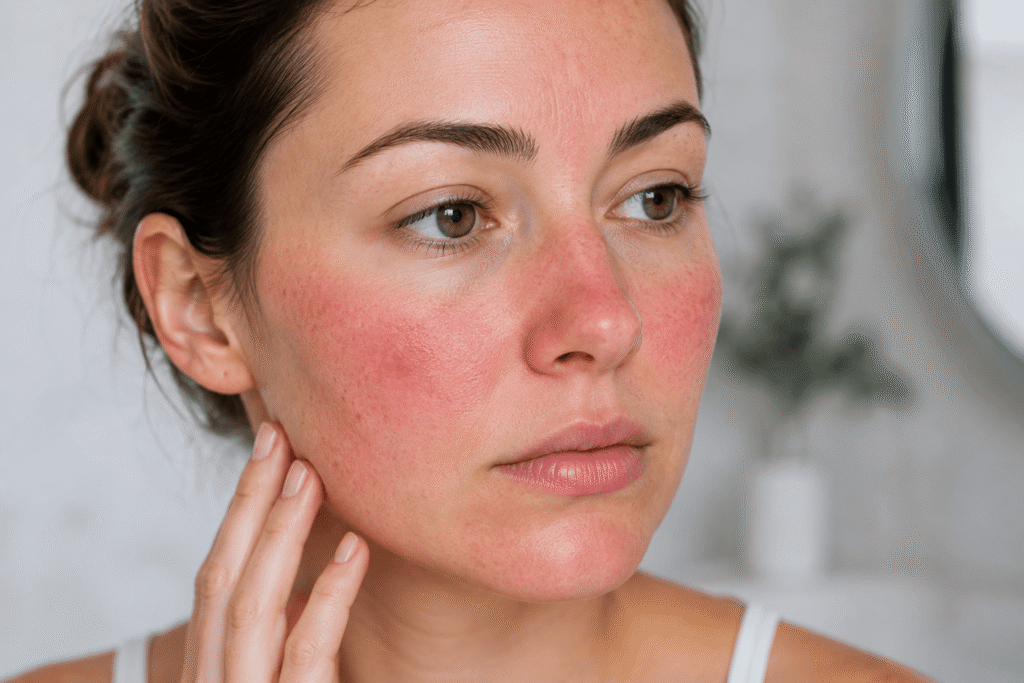
What Causes Rosacea Redness?
The redness associated with rosacea comes from a combination of chronic blood vessel dilation and visible telangiectasia (broken capillaries) that develop as part of the condition. Persistent central facial redness and a tendency to flush easily are actually the most common feature across all rosacea subtypes, and for the erythematotelangiectatic subtype specifically, redness and visible vessels are the primary symptom, without the acne-like bumps seen in other forms.
This redness tends to be triggered and worsened by common factors: sun exposure, heat, alcohol, spicy food, and stress. Over time, without treatment, the blood vessels involved can become permanently dilated, meaning the redness that once came and went with a flush becomes more persistently visible even at rest.
How to Detect Rosacea Redness
- Persistent redness centered on the cheeks, nose, chin, and forehead
- A tendency to flush or blush more easily and intensely than before
- Visible small blood vessels (telangiectasia) within the reddened areas
- Redness that's triggered or worsened by heat, sun, alcohol, spicy food, or stress
- Redness that persists even when you're not actively flushed or embarrassed
When Is It Worth Treating Rosacea Redness?
- Facial redness is a primary concern, even if you don't have the bumps or breakouts sometimes associated with rosacea
- Redness and flushing are affecting your confidence or how you feel in social or professional settings
- You've already been diagnosed with rosacea and want to specifically address the visible redness and vessels
- You're not sure whether ongoing facial redness is rosacea or another cause, worth confirming before choosing a treatment approach
What Happens If Rosacea Redness Is Left Untreated?
Rosacea redness tends to progress without treatment. What starts as occasional flushing in response to specific triggers often becomes more persistent over time, and the underlying blood vessels can become permanently dilated, meaning the redness stops fully fading between flare-ups and simply becomes a constant baseline. Visible blood vessels associated with rosacea also don’t resolve on their own once they’ve developed.
Beyond the physical progression, chronic, visible facial redness has a real impact on confidence and quality of life for many patients, and that impact tends to compound the longer it’s left unaddressed. Because both the underlying rosacea and the visible redness itself tend to respond better with earlier, consistent management than with treatment started after the condition has become more entrenched, addressing it sooner rather than later generally produces better long-term results.

The Genesis Dermatology Process
- A consultation to confirm rosacea as the cause of your redness and assess your specific pattern and triggers
- Medical management of the underlying rosacea, since controlling the condition itself supports better, more lasting results from redness-specific treatment
- Laser or IPL treatment, using wavelengths that specifically target the blood vessels responsible for visible redness, to reduce both persistent erythema and visible vessels
- A series of sessions for optimal results, since visible improvement in redness typically builds gradually over several treatments
- Trigger identification and sun protection guidance to help maintain results between treatments