Ultherapy

What Is Ultherapy?
Ultherapy uses micro-focused ultrasound with visualization (MFU-V) to deliver precise, controlled heat to specific depths beneath the skin, including the same structural layer (the SMAS) that’s lifted during a surgical facelift. Because the ultrasound energy is focused on a fixed depth, it passes harmlessly through the skin’s surface and only generates heat at that targeted layer, leaving the surface and surrounding tissue undisturbed.
That targeted heat creates small points of thermal coagulation in the tissue, which triggers your body’s natural wound-healing response: new collagen and elastin production. Over the following months, that new collagen gradually lifts and tightens the treated area from within, rather than the more immediate but temporary effect of a treatment that only works at the skin’s surface.
What Areas Can Ultherapy Treat?
- Brow, providing a subtle lift to sagging or heavy brows
- Under the chin and neck, for improved definition and reduced skin laxity
- Chest (décolleté), to improve the appearance of lines and wrinkles
Am I a Good Candidate for Ultherapy?
Good Candidates Are Typically
- Experiencing mild to moderate skin laxity or sagging on the brow, chin, neck, or chest
- Looking for a non-surgical alternative to a facelift, or a way to delay one
- Comfortable with a gradual, natural-building result rather than an immediate change
- In good general health with realistic expectations about the degree of lift achievable non-surgically
This Treatment May Not Be Right for You If
- You have significant skin laxity that would likely require a surgical facelift for the degree of correction you're looking for
- You are pregnant
- You have open wounds, active skin infections, or severe acne in the treatment area
- You have certain implanted electronic devices, worth discussing with your provider beforehand
What to Expect During Your Ultherapy Session
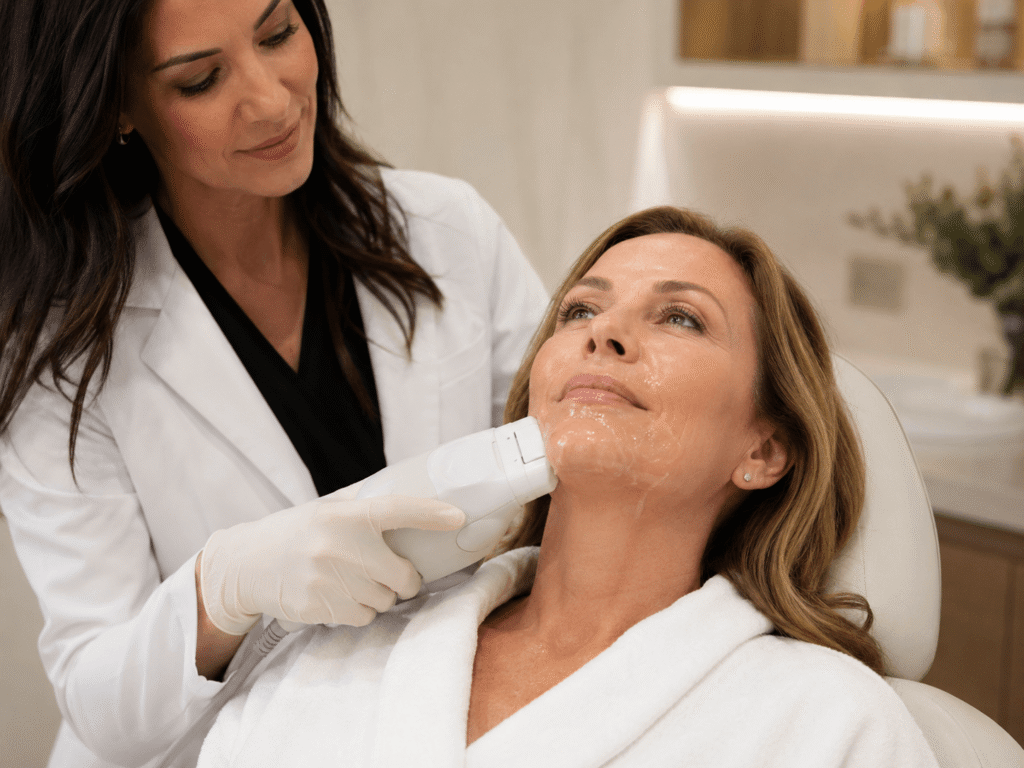
- A single session typically takes 60 to 90 minutes, depending on the area(s) treated
- No incisions, needles, or downtime, most patients return to normal activities immediately
- Some temporary redness, swelling, or tenderness in the treated area is common and typically resolves within hours to a few days
- Most patients need just one session per area to see results, though a touch-up may be recommended for some patients